Welcome to Peru 🇵🇪. Our journey begins in Lima (sea level), a coastal capital built on layers of history — from pre-Columbian civilisations to Spanish colonial power and the vibrant urban culture of today. The Pacific Ocean shapes the rhythm of the city, while street food stalls, music and art give it constant movement.
We begin by walking through Barranco and Miraflores, neighbourhoods where colourful houses, murals and cafés overlook the cliffs above the ocean. It’s an easy introduction to Peru — a place where ancient cultures and contemporary life constantly overlap.
Accommodation: hotel in Lima
Meals: –
This morning we step back nearly two thousand years at Huaca Pucllana, a massive adobe pyramid built by the Lima civilisation long before the rise of the Inca Empire. The structure rises unexpectedly from the middle of the modern city, reminding us how deeply the past is embedded in Peru’s landscape.
Walking through the site reveals ceremonial courtyards, storage areas and ritual spaces once used by priests and rulers. Archaeology here continues to uncover layers of life, belief and political power that shaped the coast centuries before Spanish arrival.
Accommodation: hotel in Lima
Meals: –
In the afternoon we leave the Pacific coast and fly east into the Andes, arriving in Cusco (3,399 m), once the capital of the vast Inca Empire. From the air, the mountains appear endless — sharp ridges, deep valleys and high plateaus shaped by centuries of human adaptation.
Cusco itself tells a story in stone. Spanish churches and mansions stand on top of massive Inca foundations, perfectly cut blocks that have survived earthquakes for centuries. Walking through the historic centre reveals how two civilisations fused into one layered city.
Accommodation: hotel in Cusco
Meals: breakfast
Today we travel through the Sacred Valley, one of the most fertile regions of the Andes and an agricultural heartland of the Inca world. Terraces climb the mountainsides, evidence of a sophisticated farming system that allowed crops to grow in harsh highland environments.
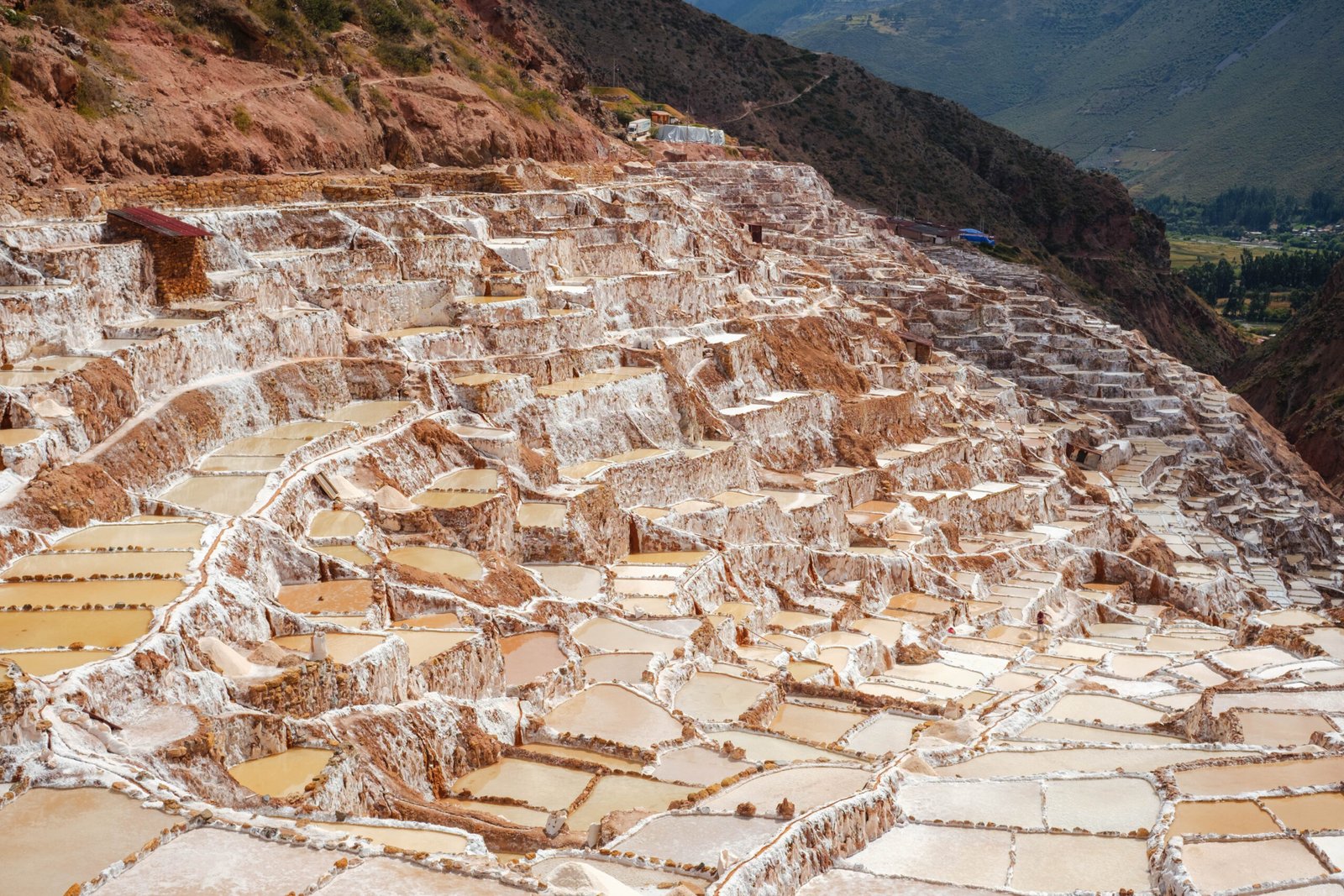
At Pisaq we explore impressive hilltop ruins overlooking the valley, then continue to Moray, where circular terraces created unique microclimates used for agricultural experimentation. Nearby, thousands of shallow pools at the Maras Salt Mines still produce salt using techniques that date back centuries.
Accommodation: hotel in Ollantaytambo
Meals: breakfast
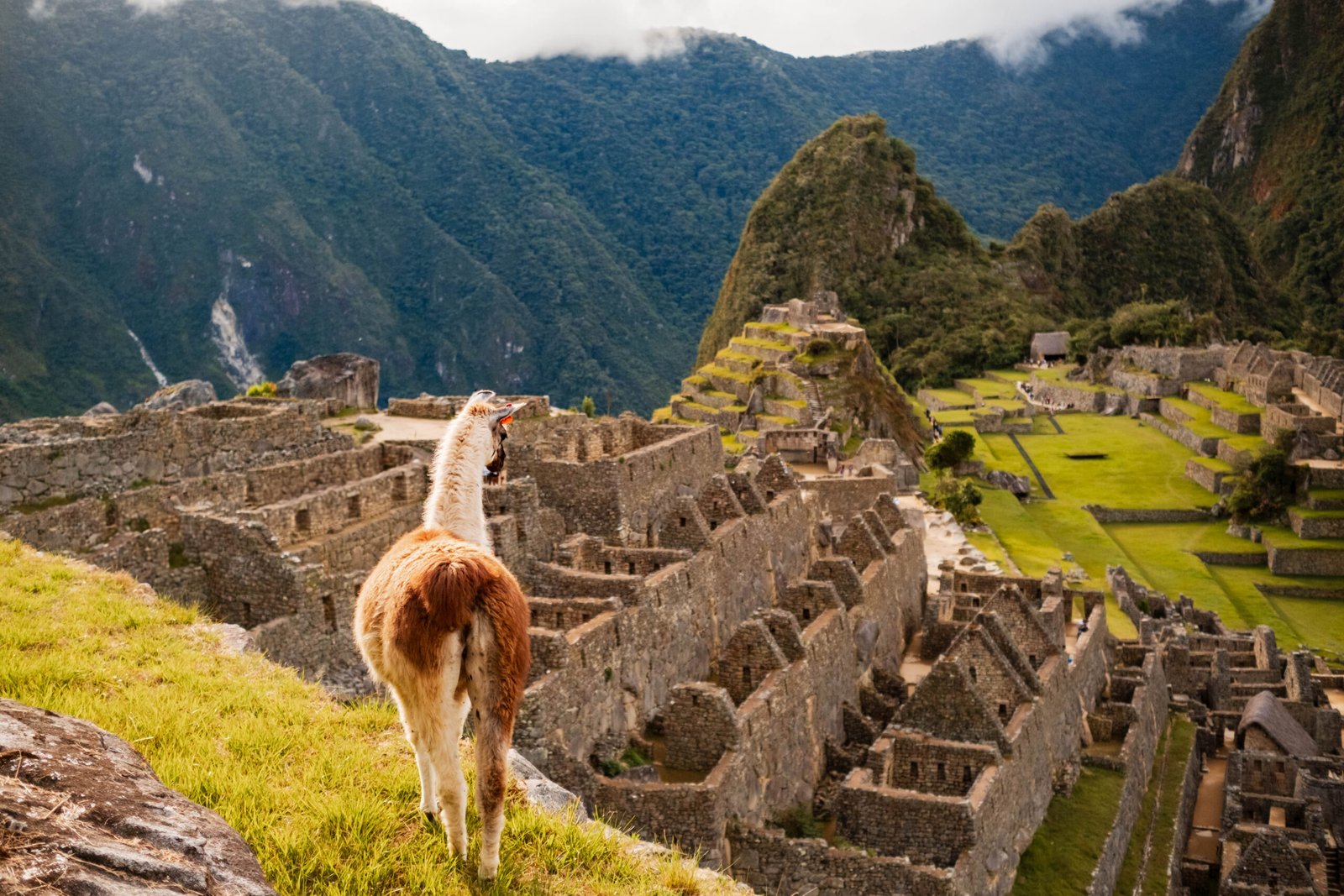
An early train takes us along the Urubamba River, the valley slowly narrowing as the mountains close in. Dense cloud forest replaces highland landscapes as we approach the hidden citadel of Machu Picchu (2,430 m).
Built in the 15th century and abandoned during the Spanish conquest, the city remained unknown to the outside world for centuries. Walking among temples, terraces and stone pathways reveals the remarkable engineering, astronomy and spiritual meaning embedded in Inca architecture.
Accommodation: hotel in Cusco
Meals: breakfast
Before sunrise we begin our journey deeper into the Andes toward one of the region’s most striking natural landscapes. Along the way we pass small farming communities where alpacas and llamas graze across the high plains.
Rainbow Mountain’s vivid colours come from layers of mineral deposits formed over millions of years — iron, copper and sulphur painting the mountains in deep reds, yellows and greens. The high altitude makes the walk demanding, but the vast silence of the landscape makes the experience unforgettable.
Accommodation: hotel in Cusco
Meals: breakfast and lunch
The morning begins in Cusco’s historic centre, where colonial arcades, narrow streets and bustling markets reveal daily life in the Andes. San Pedro Market offers an explosion of colours, smells and flavours — fruits from the Amazon, potatoes from the highlands and spices from across the country.
In the evening we board an overnight tourist bus toward Bolivia, travelling across the Altiplano — the immense high plateau that stretches across several Andean countries and connects ancient trade routes that existed long before modern borders.
Accommodation: Tourist hotel-bus
Meals: breakfast
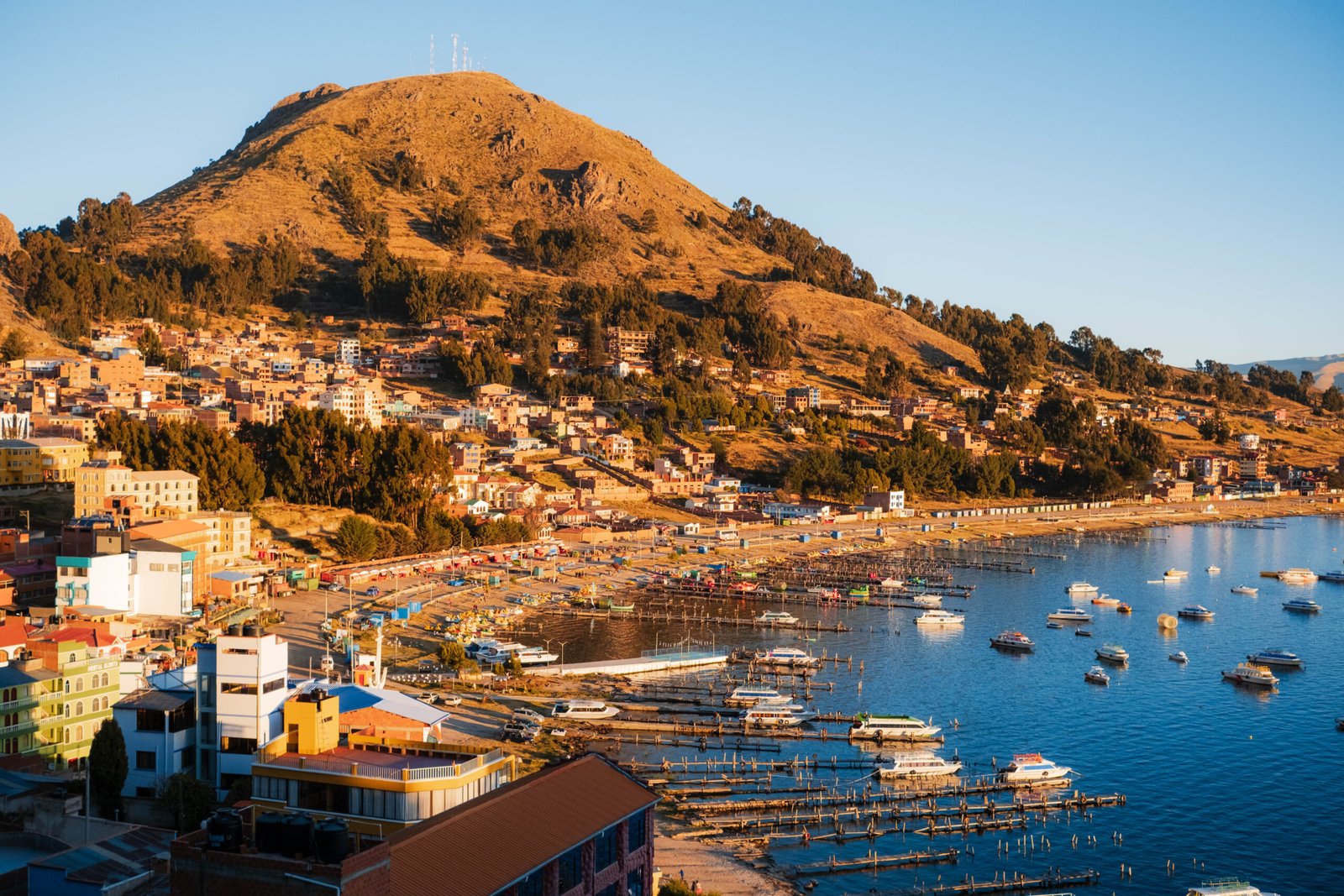
Welcome to Bolivia 🇧🇴. We arrive in Copacabana (3,841 m), a small town perched on the shores of Lake Titicaca, the highest navigable lake in the world. For Andean cultures this lake is sacred — a place tied to the origins of the sun and the Inca civilisation.
The surrounding mountains and deep blue waters create a landscape that feels both vast and intimate. Walking through town reveals a mix of indigenous traditions, Catholic rituals and lake-based life that has shaped communities here for centuries.
Accommodation: ecolodge in Copacabana
Meals: –
A boat carries us across Lake Titicaca to Isla del Sol, an island woven into Inca mythology. According to legend, the first Inca rulers emerged from these waters, sent by the sun god to found a civilisation.
Stone paths connect small villages and ancient terraces across the island’s hills. Life here moves slowly, guided by farming traditions and the rhythms of the lake that has sustained communities for generations.
Accommodation: ecolodge in Copacabana
Meals: –
We travel south to La Paz (3,640 m), a city that unfolds dramatically inside a vast Andean canyon. Houses climb the steep slopes while the snow-covered peak of Illimani towers above the skyline.
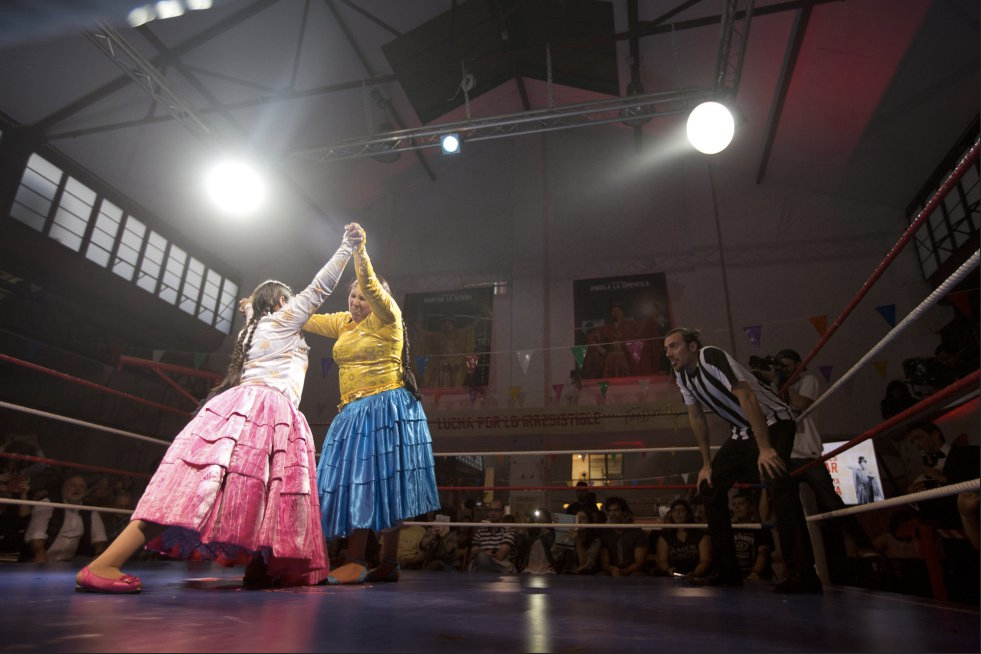
In the afternoon we experience Cholita Wrestling, a uniquely Bolivian spectacle inspired by lucha libre. Aymara women wearing traditional skirts and bowler hats perform dramatic wrestling matches — a playful performance that has also become a symbol of indigenous pride and empowerment.
Accommodation: hotel in La Paz
Meals: –
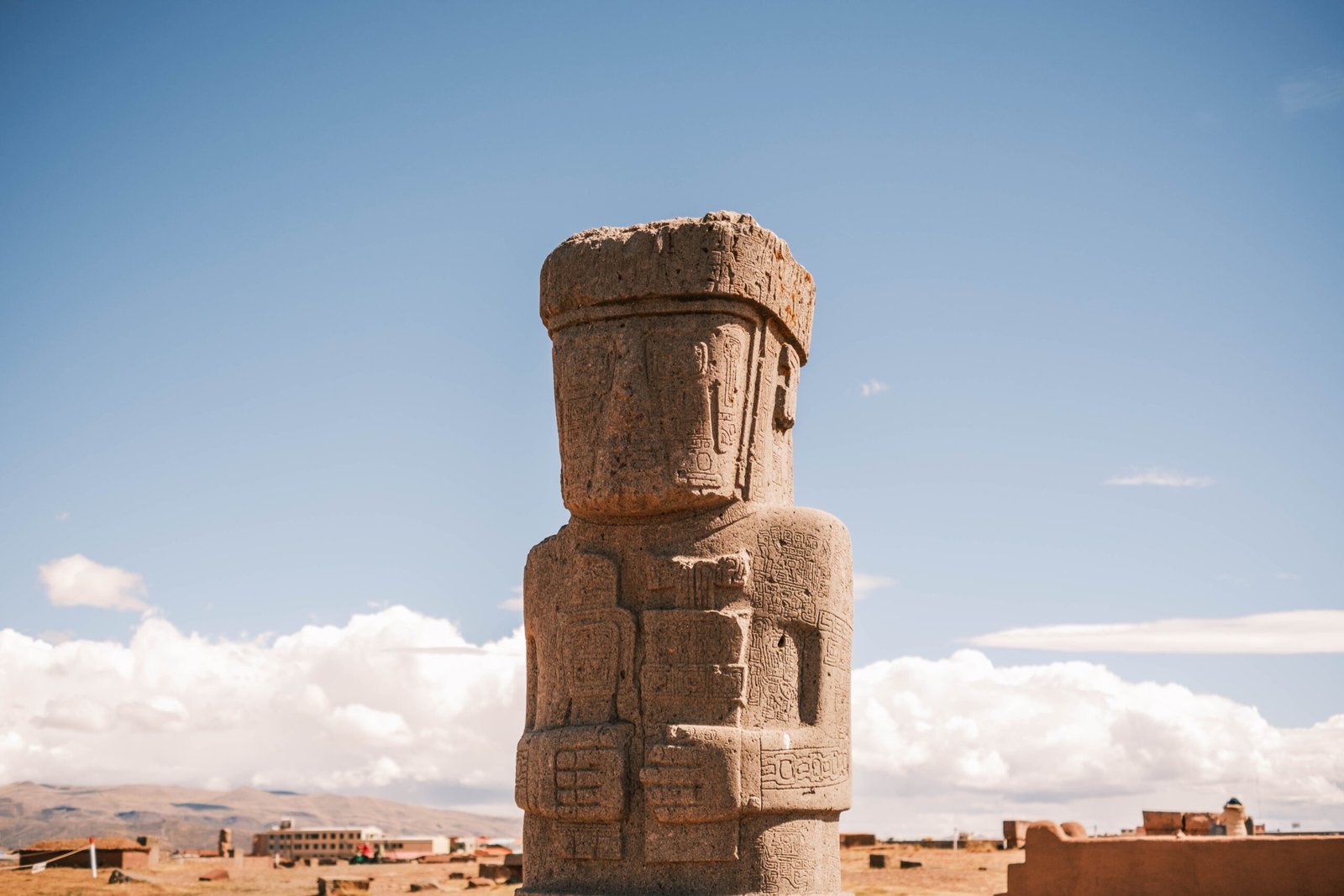
Today we visit Tiwanaku (3,850 m), one of the oldest and most influential civilisations in the Andes. Long before the Inca Empire, this society built monumental temples and controlled large trade networks across the region.
The site is filled with carved stone gateways, ceremonial platforms and massive statues representing ancestors and deities. The famous Sun Gate, aligned with astronomical cycles, hints at a complex understanding of time, cosmology and power.
Accommodation: hotel in La Paz
Meals: breakfast
Exploring La Paz means moving vertically through the city. Using the Mi Teleférico cable car system, we glide above markets, neighbourhoods and steep canyon walls while the Andes surround the horizon.
At street level we encounter layers of Andean spirituality. The Witches’ Market displays herbs, charms and ritual objects used in traditional ceremonies, while museums such as the Ethnographic and Folklore Museum reveal the diversity of Bolivia’s indigenous cultures. At night we board our bus toward Uyuni.
Accommodation: Tourist hotel-bus
Meals: breakfast
Our journey begins among the rusting locomotives of the Train Cemetery, relics from Bolivia’s once-ambitious railway projects during the mining boom.
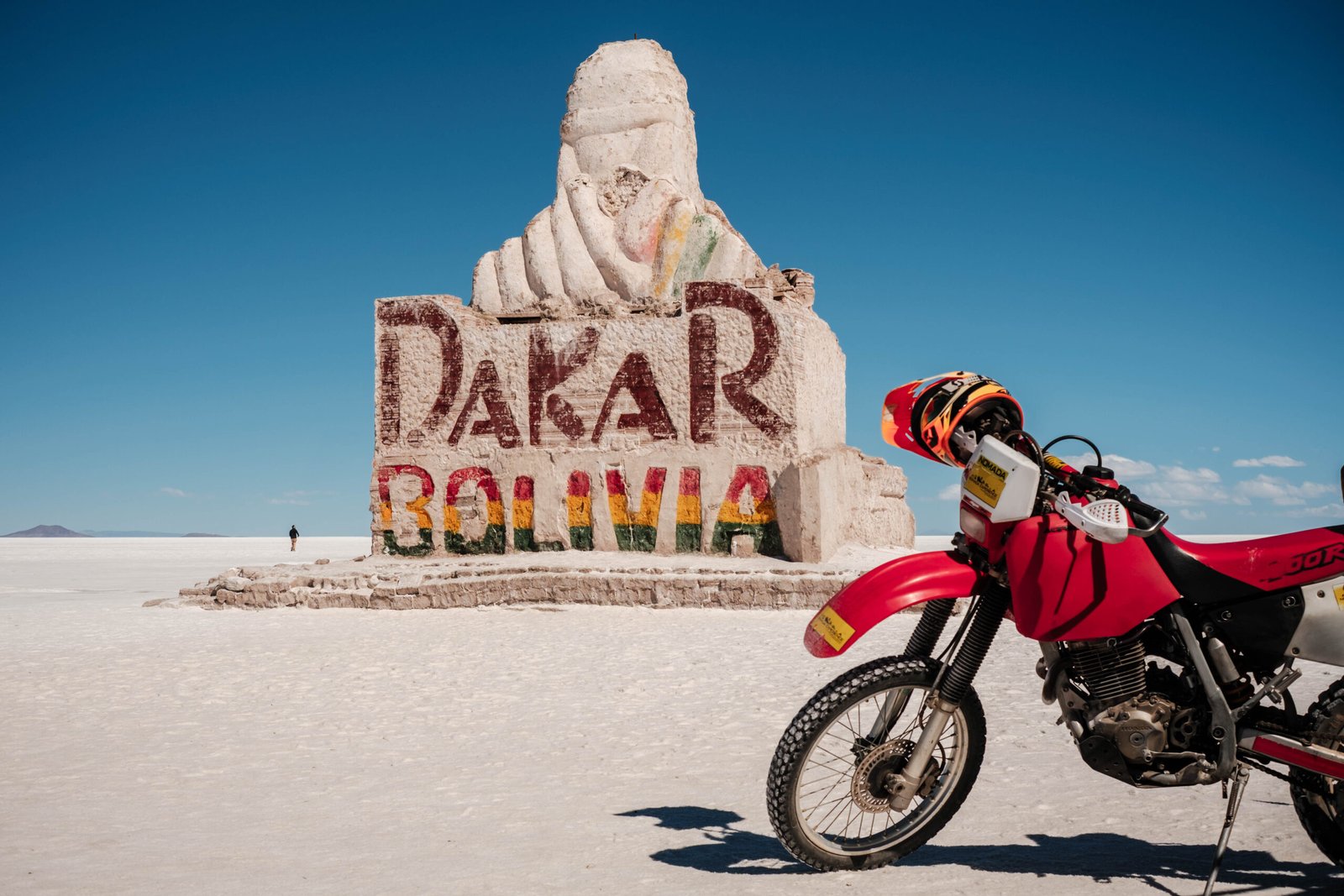
From there we enter the Uyuni Salt Flats (3,656 m), a blinding white desert stretching more than 10,000 km². Formed from an ancient prehistoric lake, the perfectly flat surface creates surreal reflections and optical illusions that have made this one of the most photographed landscapes on Earth.
Accommodation: Salt hotel on the Uyuni Desert
Meals: lunch and dinner
Today we cross the Eduardo Avaroa National Reserve, where landscapes shift constantly between deserts, lagoons and volcanoes. Mineral-rich waters create intense colours — deep reds, turquoise blues and milky whites.
Flamingos feed in the shallow lakes while vicuñas move across the high plains. At over 4,500 metres above sea level, the silence and scale of the Altiplano create a landscape that feels almost otherworldly.
Accommodation: refuge near Coloured Lagoon
Meals: breakfast, lunch and dinner
At sunrise we reach the steaming geysers of Sol de Mañana, where geothermal vents release clouds of steam across the cold desert air. Nearby, the Polques hot springs offer warm mineral waters surrounded by stark volcanic landscapes.
Crossing the border into Chile, the road descends toward San Pedro de Atacama (2,400 m), a small adobe town in the heart of one of the driest deserts on Earth.
Accommodation: guesthouse in San Pedro de Atacama
Meals: breakfast
San Pedro sits between salt flats, volcanoes and vast desert plains shaped by wind and time. In the afternoon we enter Valle de la Luna, a landscape sculpted into ridges and dunes that resemble the surface of another planet.
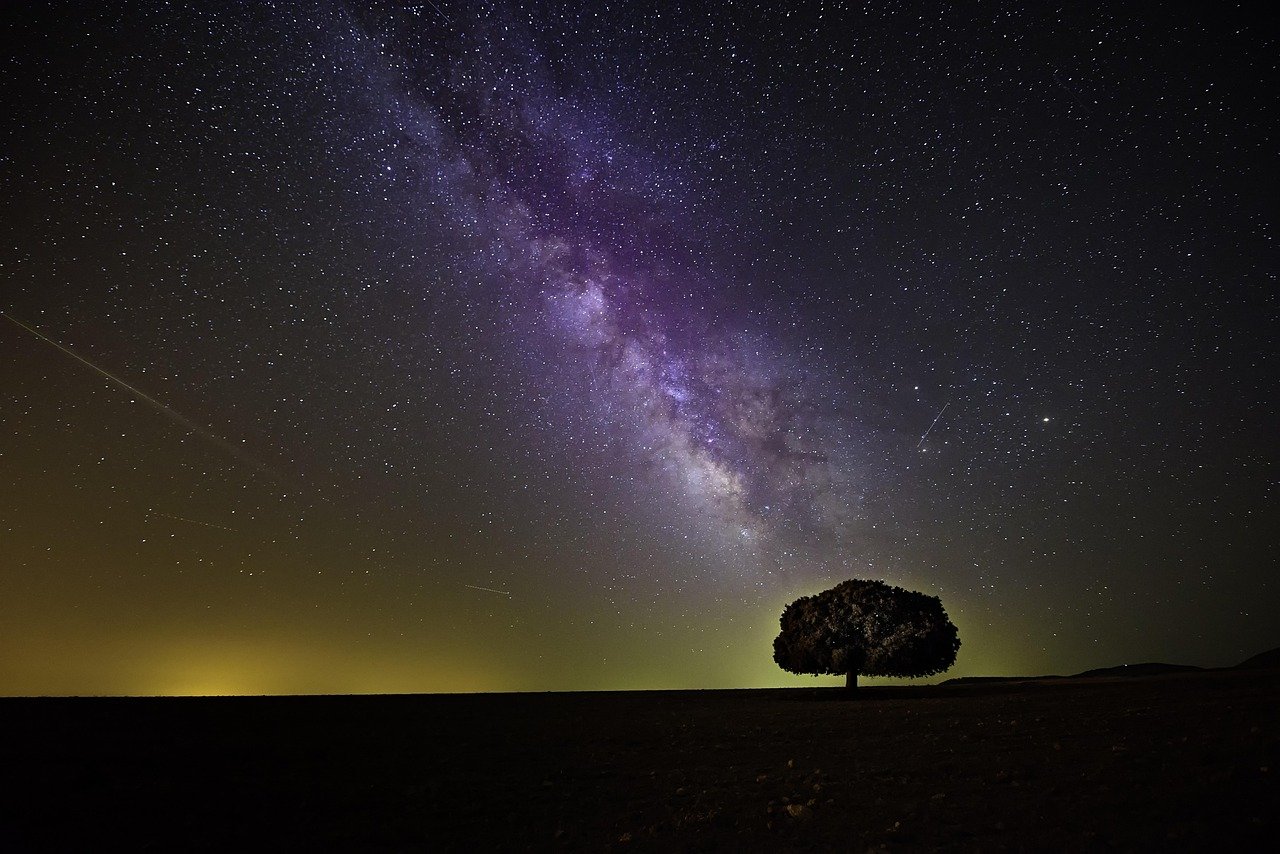
After sunset the desert reveals one of its greatest treasures: the night sky. With almost no humidity or light pollution, the Atacama is one of the best places on Earth for astronomy, allowing us to observe distant galaxies and the bright arc of the Milky Way.
Accommodation: guesthouse in San Pedro de Atacama
Meals: breakfast
The morning in San Pedro reveals daily life in this desert outpost — adobe houses, small plazas and local markets serving travellers and scientists alike.
In the afternoon we fly south to Santiago (500 m). Nestled between the Andes and the Pacific, Chile’s capital acts as our gateway to the Pacific Ocean and the remote island waiting ahead.
Accommodation: hotel near Santiago Airport
Meals: breakfast
Iorana 🌺 (that means “hello” in Rapa Nui) — welcome to Rapa Nui, one of the most isolated inhabited islands on Earth. Located thousands of kilometres from the nearest continent, the island was settled by Polynesian navigators who crossed the Pacific guided only by stars, winds and ocean currents.
Rapa Nui is more than a destination — it is a living culture, language and identity shaped by isolation and resilience. The volcanic landscape and endless ocean horizon create a powerful sense of place.
Accommodation: traditional Rapa Nui cabin
Meals: breakfast
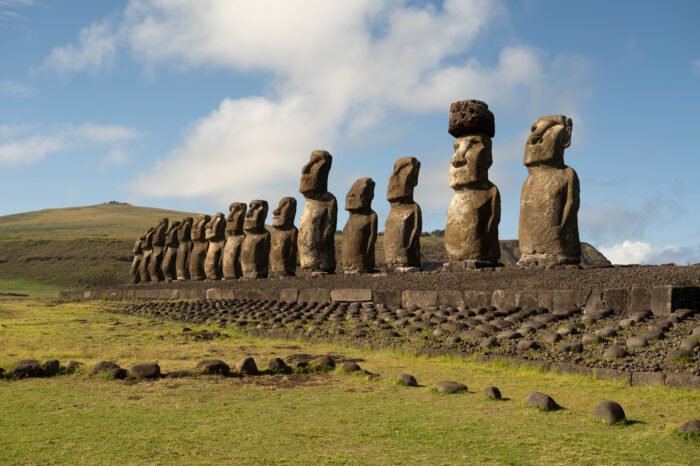
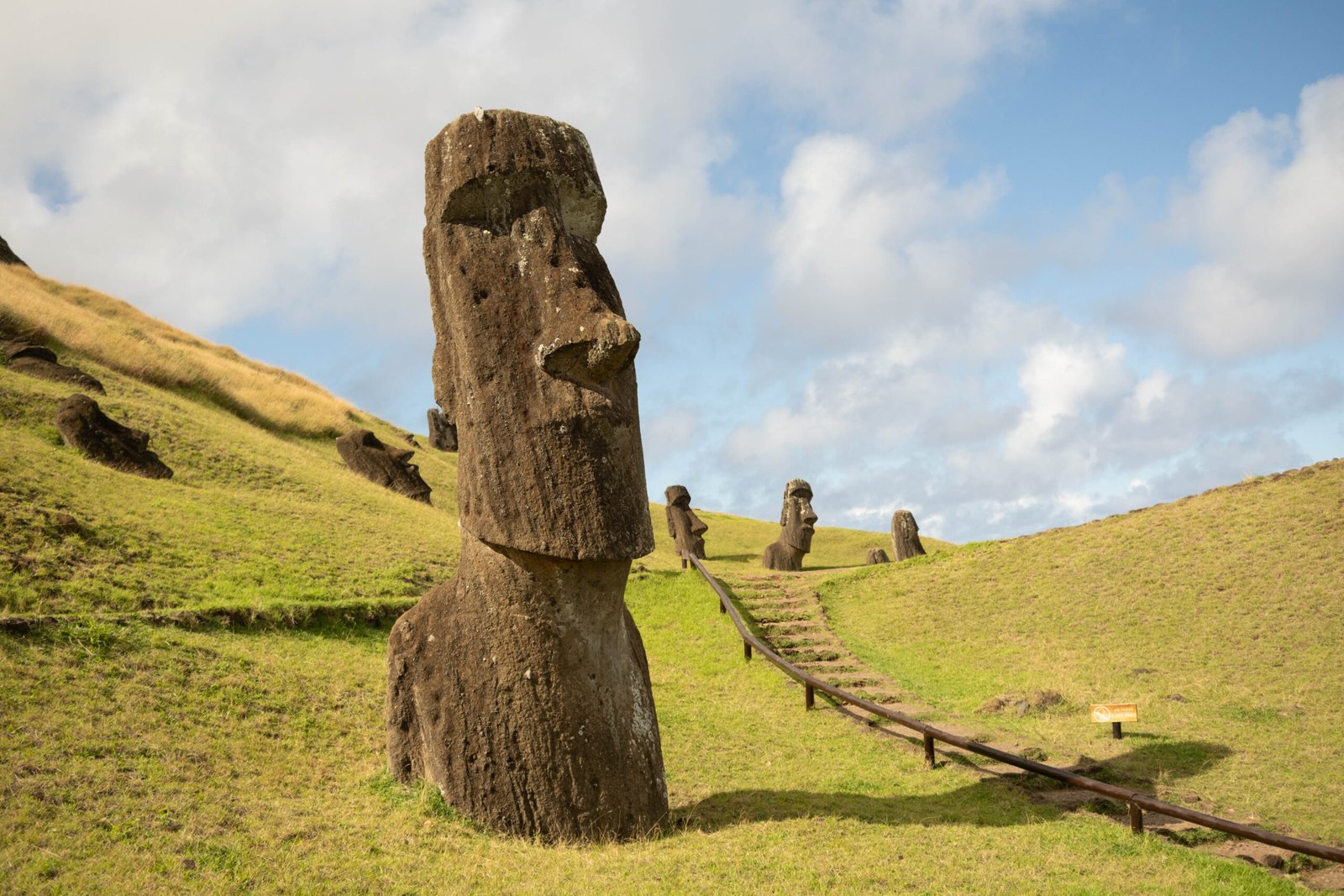
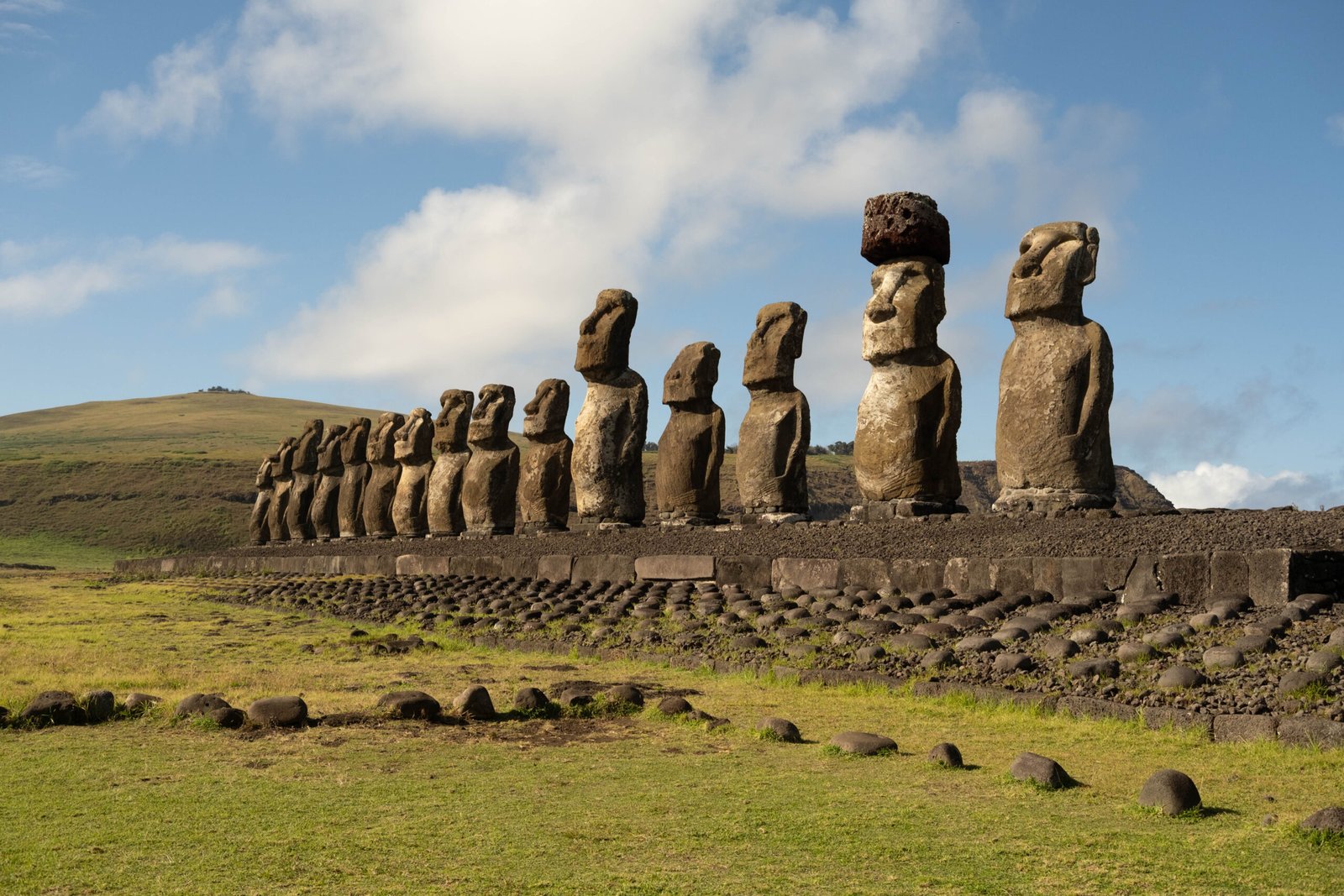
Today we explore the island’s most famous legacy: the moai. These monumental statues were carved to honour ancestors and placed on ceremonial platforms facing inland, symbolically protecting the community.
At Rano Raraku quarry we see dozens of unfinished statues still embedded in the volcanic rock, offering rare insight into how these giants were carved and transported across the island.
Accommodation: traditional Rapa Nui cabin
Meals: –
We visit Orongo, a ceremonial village perched on the rim of the Rano Kau volcano. From here we learn about the Birdman competition, a ritual where warriors swam to nearby islets to retrieve the first egg of the migrating sooty tern.
Later we explore Ana Te Pahu, a lava tube cave formed by ancient volcanic flows. These underground spaces were once used for shelter, food storage and hidden gardens — clever adaptations to life on a remote island.
Accommodation: traditional Rapa Nui cabin
Meals: –
Before dawn we visit Ahu Akahanga, where fallen moai rest along the coast. As the sun rises over the Pacific, the silhouettes of the statues appear against the changing light.
It’s a quiet moment to reflect on the cultures, landscapes and stories encountered along this journey across the Andes and the Pacific. After breakfast we transfer to the airport for our flights home.
Accommodation: –
Meals: –
⎷ Airport transfers (in the tour dates)
⎷ All accommodation
⎷ All land transports
⎷ Local guides and drivers
⎷ 22 Meals (13 breakfasts, 5 lunches, 2 dinners and 2 pic-nics)
⎷ All activities mentioned as “included”
⎷ Tickets and permits
⎷ Travel Insurance
⎷ Travel Doctor
⎷ Tour Leader Tânia Neves (English / Portuguese)
⨉ Flights
⨉ Visas
⨉ Personal Spending
⨉ Extra meals (around 30€/day)
⨉ Activities not mentioned as “included” in the itinerary
⨉ Tips and gratuities
We are calculating the carbon footprint of this tour.
We take responsibility for this impact — and we’re working to reduce it further.
Want to learn more or contribute for your flights too? Visit our sustainability page.