


ⴰⵏⴼⵍⵓ ⵖ ⵍⵎⵖⵔⵉⴱ! Welcome to Morocco 🇲🇦
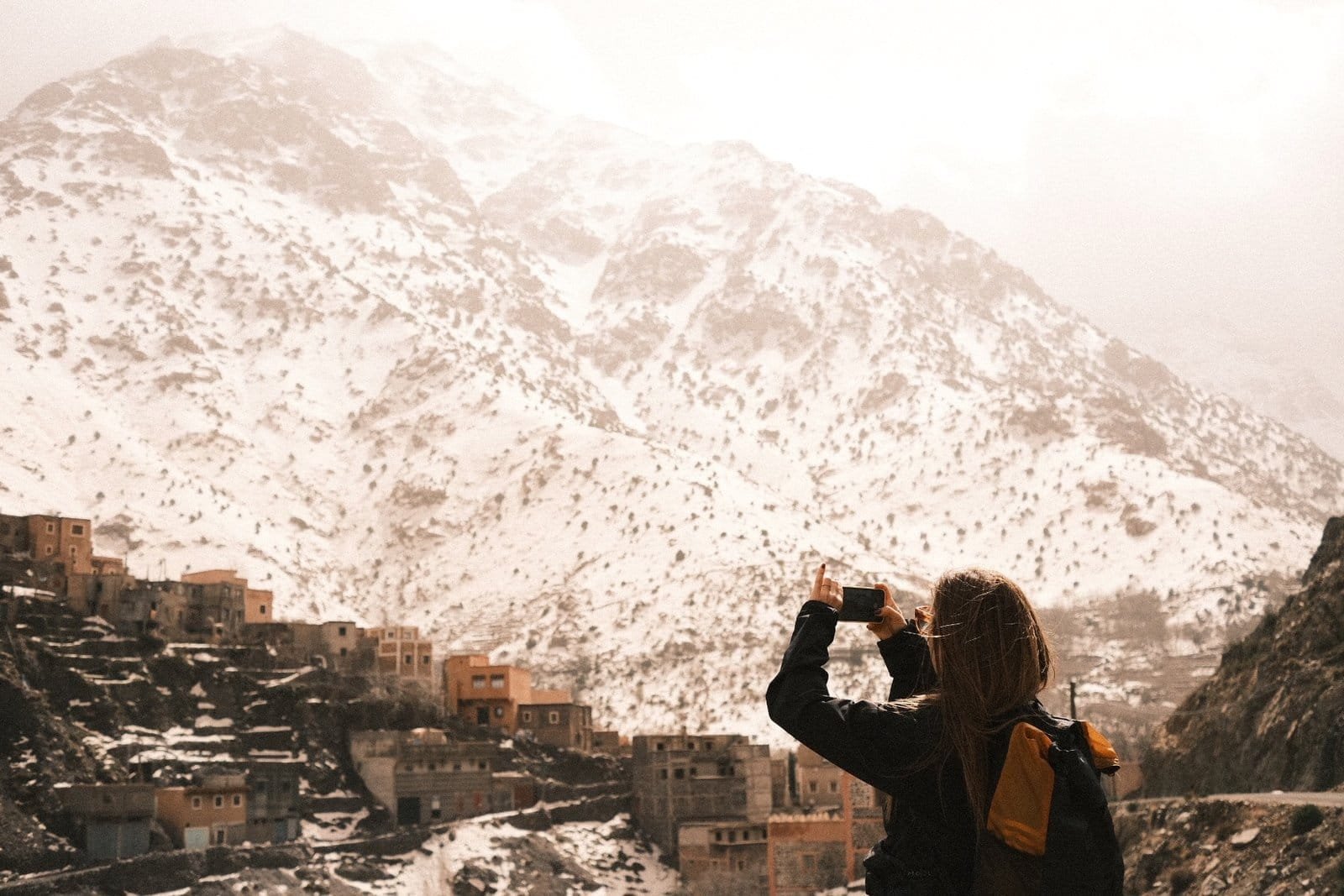
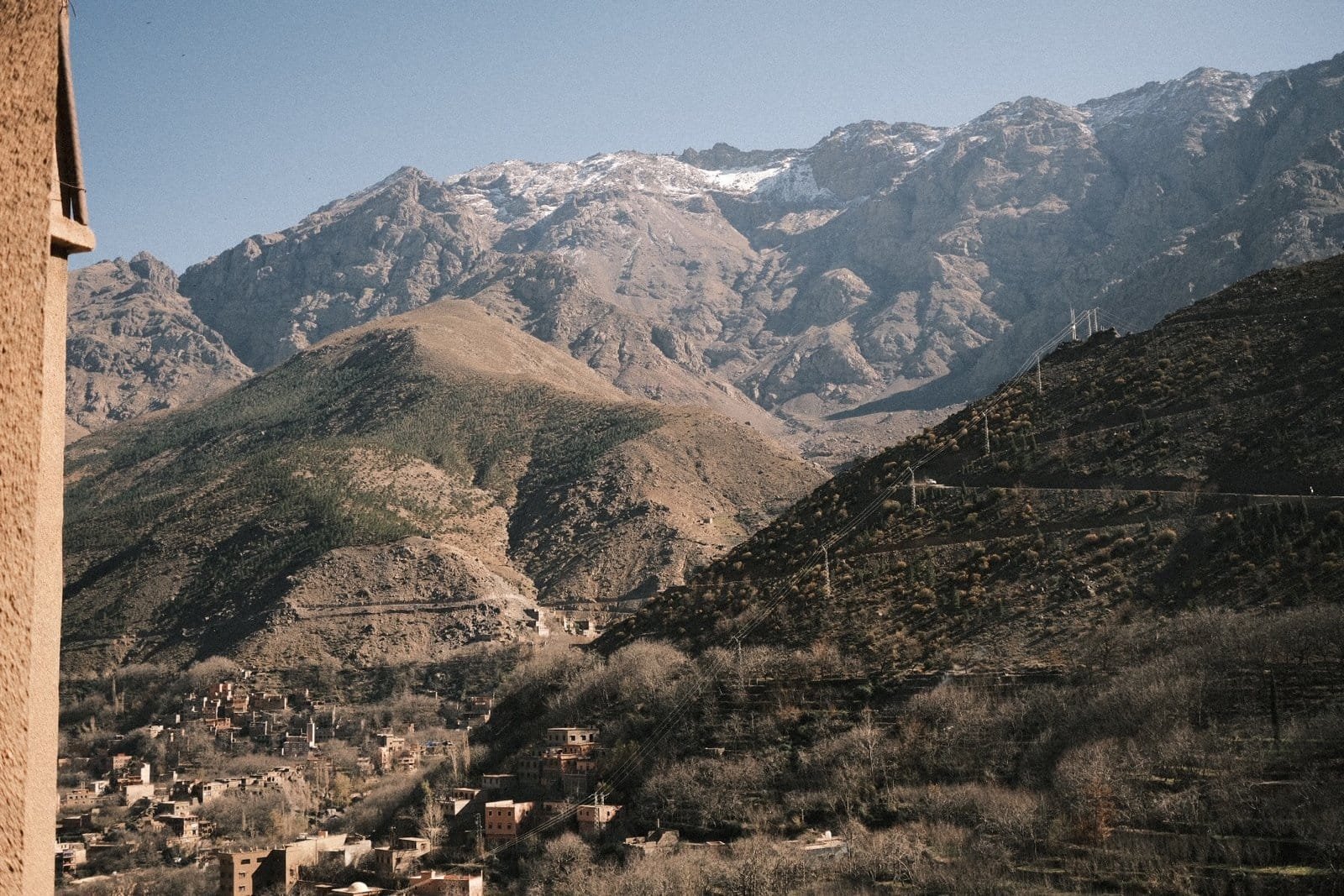
After landing in Marrakech, we leave the bustle of the city behind and head south toward the High Atlas Mountains. The road climbs steadily through fertile plains and small villages before the landscape begins to change: red earth, terraced hillsides, walnut groves, and the distant snow-capped peaks of North Africa’s highest mountain range.
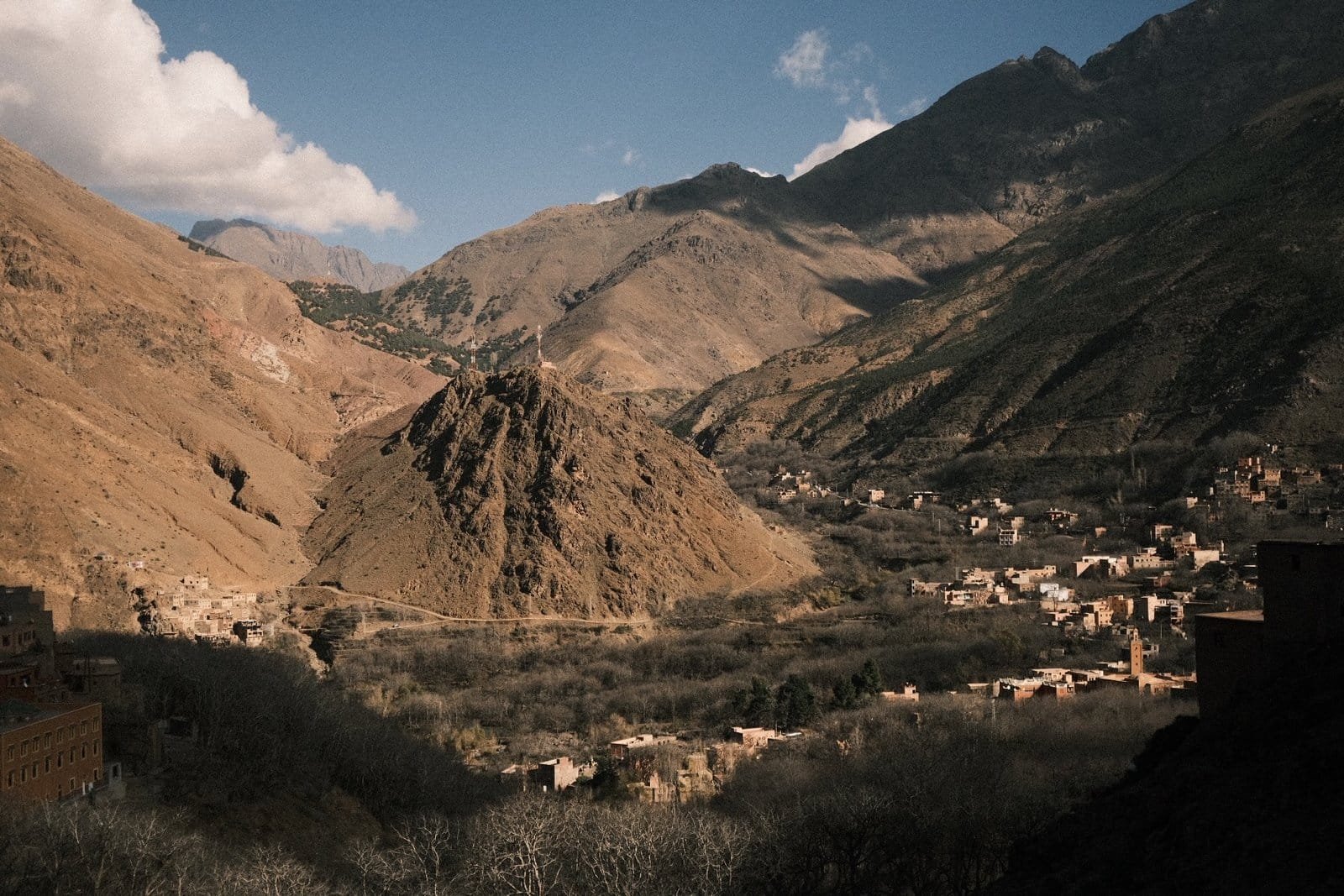
By late afternoon we reach the mountain village of Imlil, a quiet Amazigh (Berber) settlement tucked deep in the valley and surrounded by dramatic peaks. This small village has long been the gateway to the High Atlas and Mount Toubkal. Tonight we settle into our traditional guesthouse and begin to ease into the slower rhythm of mountain life.
🛌 Accommodation: Riad in Imlil
🍽️ Meals: –
After breakfast we set off on foot to explore the valleys and villages surrounding Imlil. Narrow paths connect scattered Amazigh settlements, where life continues much as it has for generations. As we walk through terraced fields and walnut orchards, we pass shepherds, farmers, and stone houses built into the mountainside.
At midday we stop in a family home for a traditional lunch, a chance to experience everyday mountain hospitality. These villages are part of a deep cultural landscape where agriculture, community life, and the mountains are closely intertwined. In the afternoon we hike back to Imlil, where the evening is spent quietly in the village.
🛌 Accommodation: Riad in Imlil
🍽️ Meals: breakfast
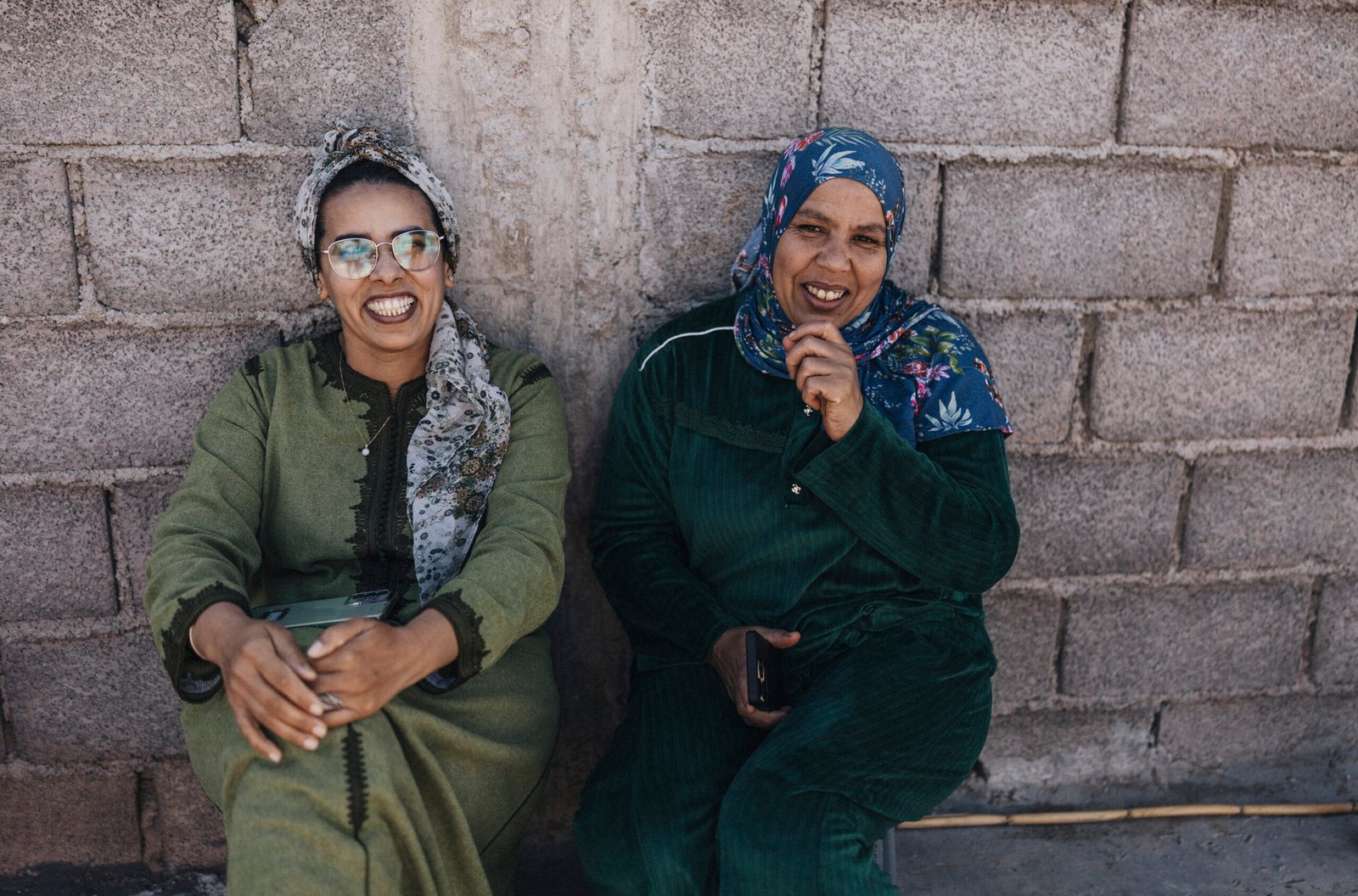
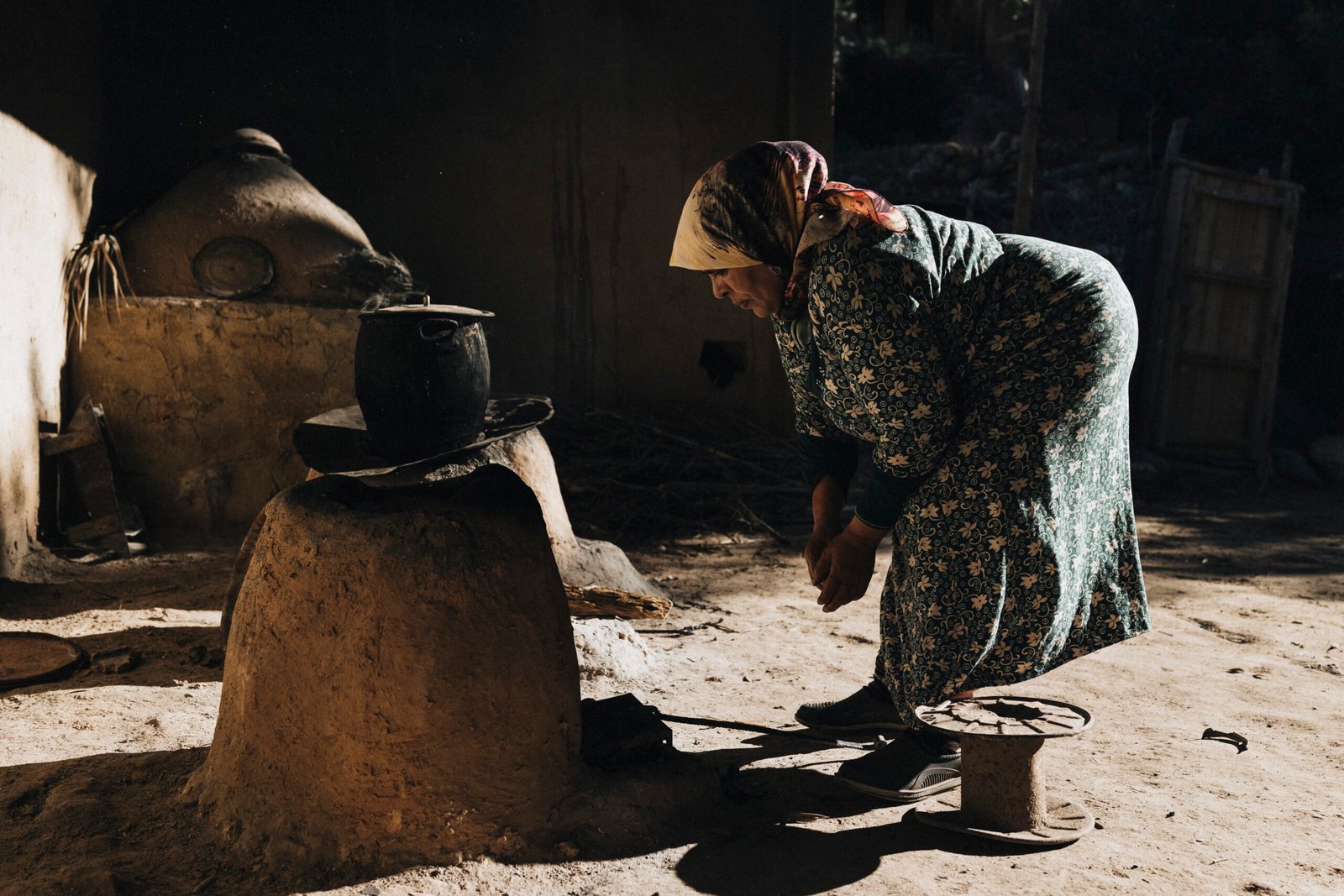
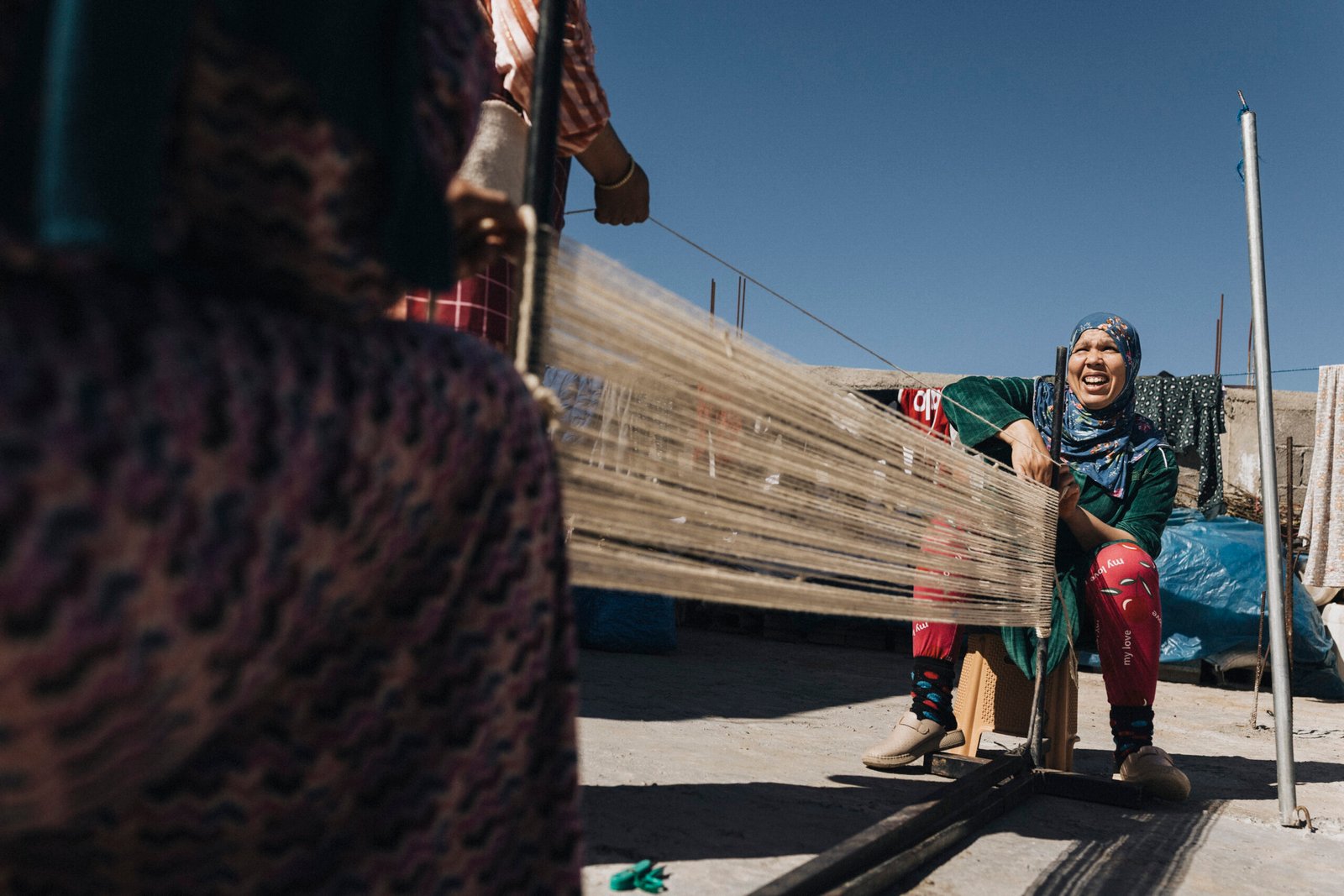
This morning we meet our driver and travel through the Atlas foothills to visit Saida, a local woman whose work and family we have been supporting over the years. This visit is part of our ongoing Woven by Women initiative, a project focused on supporting women and strengthening community ties in rural Morocco. It’s a chance to reconnect, share stories, and spend time in a home that has become part of the unusual voyages extended family.
Together with Saida and her relatives we take part in a traditional tagine cooking workshop. Using fresh local ingredients and clay pots, we prepare our own lunch the traditional way, learning techniques passed down through generations. Cooking happens slowly here — over charcoal, with plenty of conversation — and the meal becomes a shared moment around the table before we return to Imlil in the afternoon.
🛌 Accommodation: Riad in Imlil
🍽️ Meals: breakfast and lunch
After breakfast we leave Imlil and begin a scenic drive across the High Atlas Mountains. The road climbs toward the famous Tizi n’Tichka pass, one of the highest paved roads in North Africa. Along the way we pass remote villages, dramatic valleys, and mountain landscapes that shift from green terraces to vast rocky plateaus.
Descending the southern side of the mountains, the scenery becomes drier and more desert-like. This region has long been an important caravan route connecting the Sahara with the imperial cities of Morocco. By afternoon we arrive in Tamdakht and settle into a traditional riad surrounded by ancient kasbah architecture.
🛌 Accommodation: Riad in Tamdakhte
🍽️ Meals: breakfast and dinner
Today we explore one of Morocco’s most iconic landscapes. Our first stop is Ait Ben Haddou, a fortified ksar built from earth and straw that rises dramatically above the valley. This UNESCO World Heritage site was once an important stop on the trans-Saharan trade route and remains one of the best-preserved examples of southern Moroccan architecture.
Later we visit nearby Ouarzazate, often called the “Gateway to the Desert.” The town developed around old caravan routes and kasbahs, and today it’s also famous for its film studios, where many historical and desert films have been shot. In the afternoon we return to Tamdakht for another night in the shadow of the Atlas.
🛌 Accommodation: riad in Tamdakhte
🍽️ Meals: breakfast and dinner
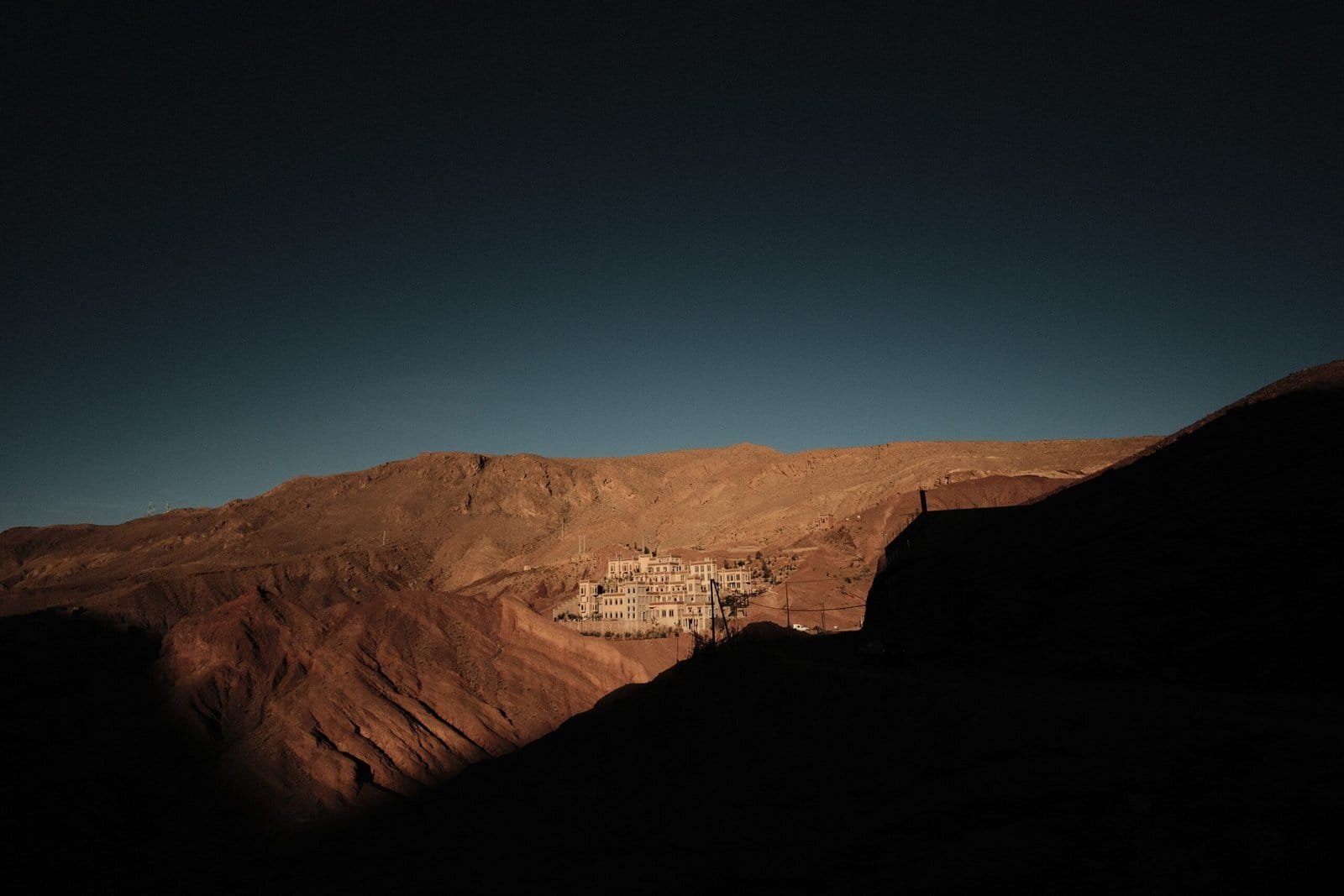
After breakfast we drive east toward the Ait Bouguemez Valley, often known as the “Happy Valley” of the Atlas. Surrounded by high peaks and fertile farmland, the valley is one of the most beautiful and culturally rich regions of the mountains.
Once we arrive we begin a gentle hike through fields, small villages, and irrigation canals that sustain local agriculture. The valley is known for its welcoming communities and traditional lifestyle. Tonight we stay in a family house in a Berber village, sharing dinner and experiencing the warmth of mountain hospitality.
🛌 Accommodation: homestay in berber village
🍽️ Meals: breakfast, lunch and dinner
Today we continue our trek through the M’Goun region, one of the most spectacular trekking areas in the High Atlas. The trail climbs steadily toward the Tizi n’Ait Ourit mountain pass at 2,606 metres. From the top, the view opens across vast valleys, green terraces, and remote Amazigh villages scattered across the slopes.
After enjoying the panorama we descend toward the village of Sermt at around 1,886 metres. Along the way we pass old kasbah ruins and cultivated valleys that contrast with the rugged mountain landscape. Tonight we stay in a local family guesthouse, sharing a simple meal and stories from life in the Atlas.
🛌 Accommodation: homestay in Sermt
🍽️ Meals: breakfast, lunch and dinner
The day begins with a descent through the Sermt valley as we continue our trek between remote Amazigh villages. Our route passes through Tachgdilte and Ayadal, communities that remain deeply connected to traditional mountain agriculture.
Along the trail the landscape becomes more dramatic as we encounter small gorges and sweeping valley views. The walk offers constant insight into daily rural life—fields being worked, donkeys carrying supplies, and children walking between villages. By late afternoon we arrive in Ait Abbas, where we spend the night.
🛌 Accommodation: homestay in Ait Abbas
🍽️ Meals: breakfast, lunch and dinner
After breakfast we begin our journey back toward Marrakech. The drive takes us through the province of Azilal, passing agricultural valleys and small towns before reaching one of Morocco’s most impressive natural landmarks.
We stop at the Ouzoud Waterfalls, the highest waterfalls in Morocco, where water plunges more than 100 metres into a lush gorge below. Olive trees, red cliffs, and mist from the falls create a surprising green landscape in the middle of the Atlas region. Later we continue to Marrakech and settle into our hotel in the historic city.
🛌 Accommodation: riad in Marrakech
🍽️ Meals: breakfast
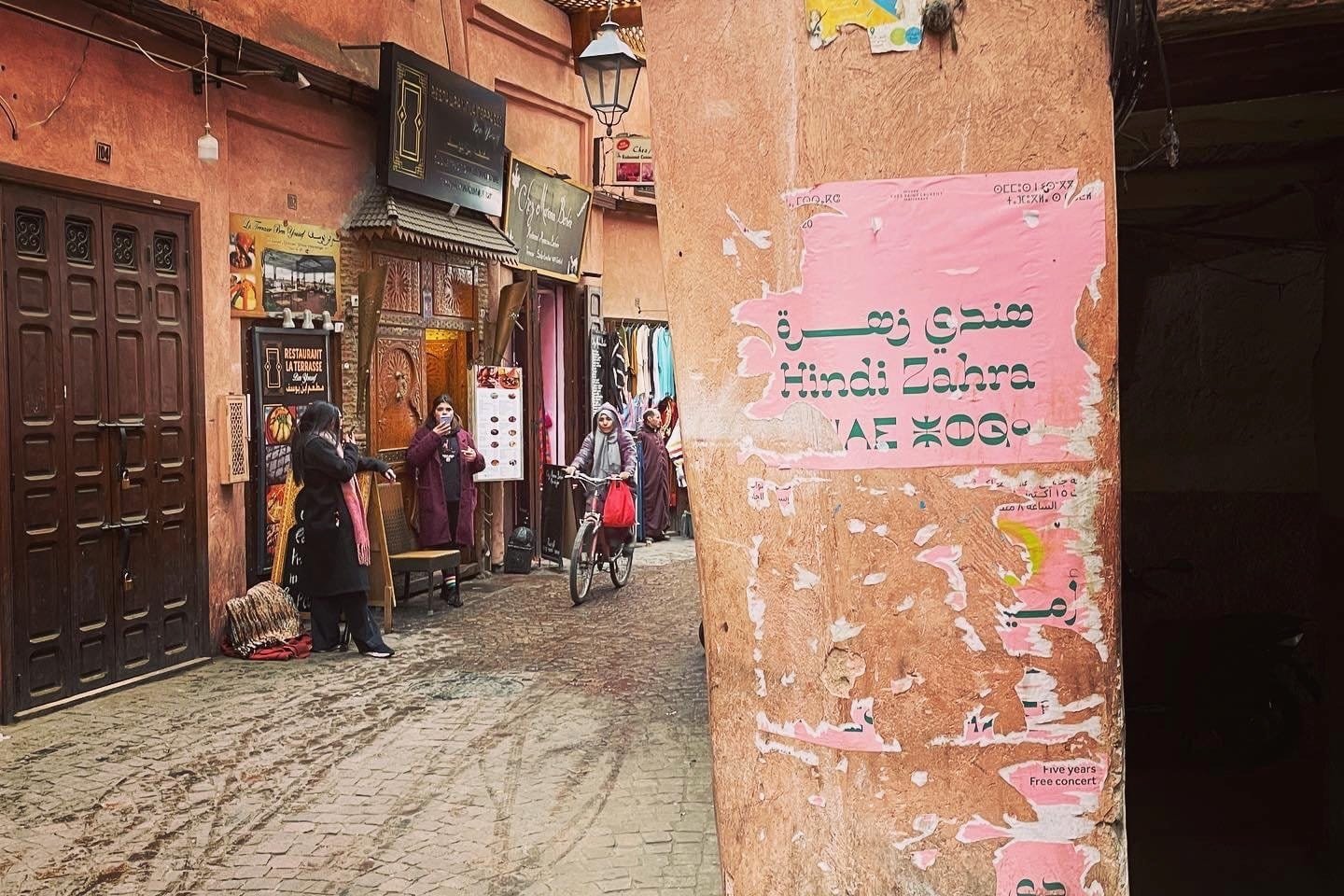
Today we explore Marrakech, one of Morocco’s great historic cities. Walking through the medina reveals a labyrinth of narrow streets filled with workshops, markets, mosques, and centuries-old architecture. The city was once a major political and cultural centre linking the Sahara, the Atlas Mountains, and the Mediterranean.
We visit key landmarks and wander through the souks, where artisans continue traditions of metalwork, textiles, leather, and ceramics. The famous Jemaa el-Fna square offers a vivid glimpse into Moroccan street culture, with storytellers, musicians, and food stalls filling the square from afternoon into night.
🛌 Accommodation: –
🍽️ Meals: breakfast
⎷ Airport transfers (in the tour dates)
⎷ All accommodation
⎷ Local guides and drivers
⎷ 18 Meals (9 breakfasts, 4 lunches and 5 dinners)
⎷ All activities mentioned as “included”
⎷ Tickets and permits
⎷ Travel Insurance
⎷ Tour Leader Tânia Neves (English / Portuguese)
⨉ Flights
⨉ Visas
⨉ Personal Spending
⨉ Extra meals (around 15€/meal)
⨉ Activities not mentioned as “included” in the itinerary
⨉ Tips and gratuities
We are calculating the carbon footprint of this tour.
We take responsibility for this impact — and we’re working to reduce it further.
Want to learn more or contribute for your flights too? Visit our sustainability page.