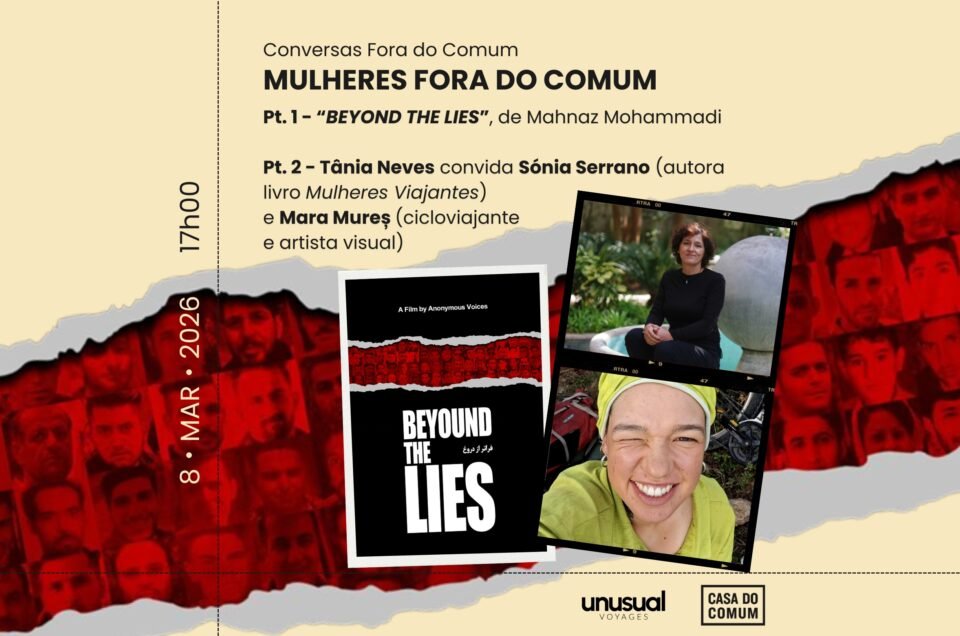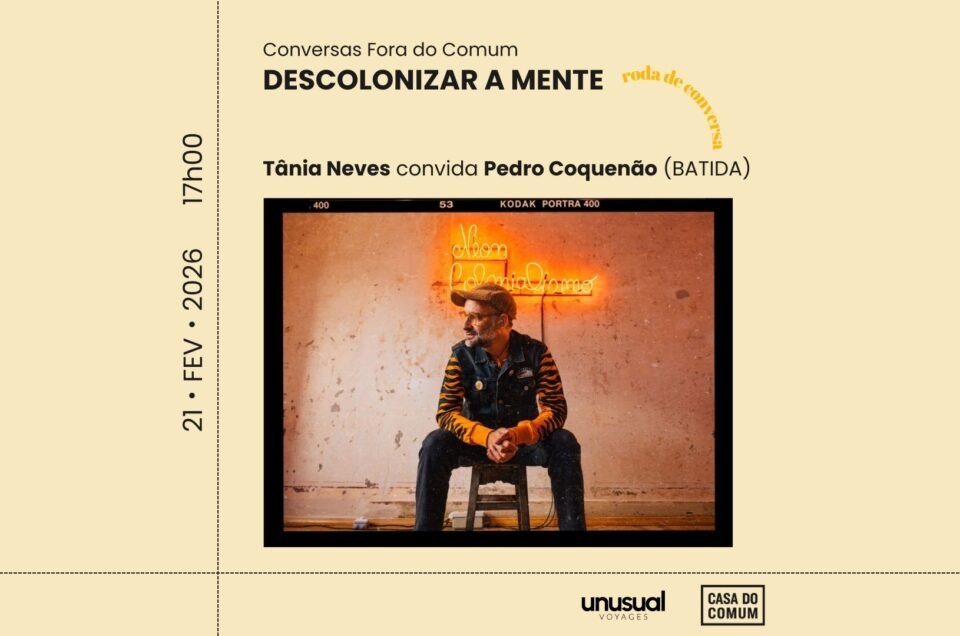
In 2026, we begin a monthly partnership with Casa do Comum in Lisbon, Portugal: Unusual Conversations. Every month, a destination becomes the starting point for a roundtable conversation that stimulates critical thinking, listening and dialogue. A way of travelling far, without actually moving.
Taking these conversations offline feels important. Sitting together in the same room allows us to connect more deeply, as human beings, and to have the kind of slow, thoughtful conversations that are often lost in fast digital spaces. The hope is simple: to broaden our understanding of the world, and of each other.
The format is deliberately uncomplicated. Once a month, I invite one or two travellers to join me for a conversation around a specific theme — usually framed with a slightly clickbait title. Behind the title, though, is always the same intention: to open space for nuance, lived experience and honest questioning.
At unusual voyages, travel has never been about ticking destinations off a list. It’s about relationships, responsibility and awareness. These conversations reflect that. They draw from real journeys, encounters on the ground, and the contradictions that come with moving through different cultures and political contexts.
We are living in a time of growing polarisation — ideological, political, religious. Narratives are simplified, positions harden, and empathy often gets lost along the way. Creating space to talk about these issues feels less like a choice and more like a necessity.
Unusual Conversations don’t aim to convince or to offer answers. They exist to ask better questions. What does it mean to travel today? What do we carry with us across borders? How do power, privilege, history and identity shape the way we move through the world?
This is our way of continuing the work we do through travel — by listening, sharing stories, and staying curious.
First Unusual Conversation
Travel is a Political Act
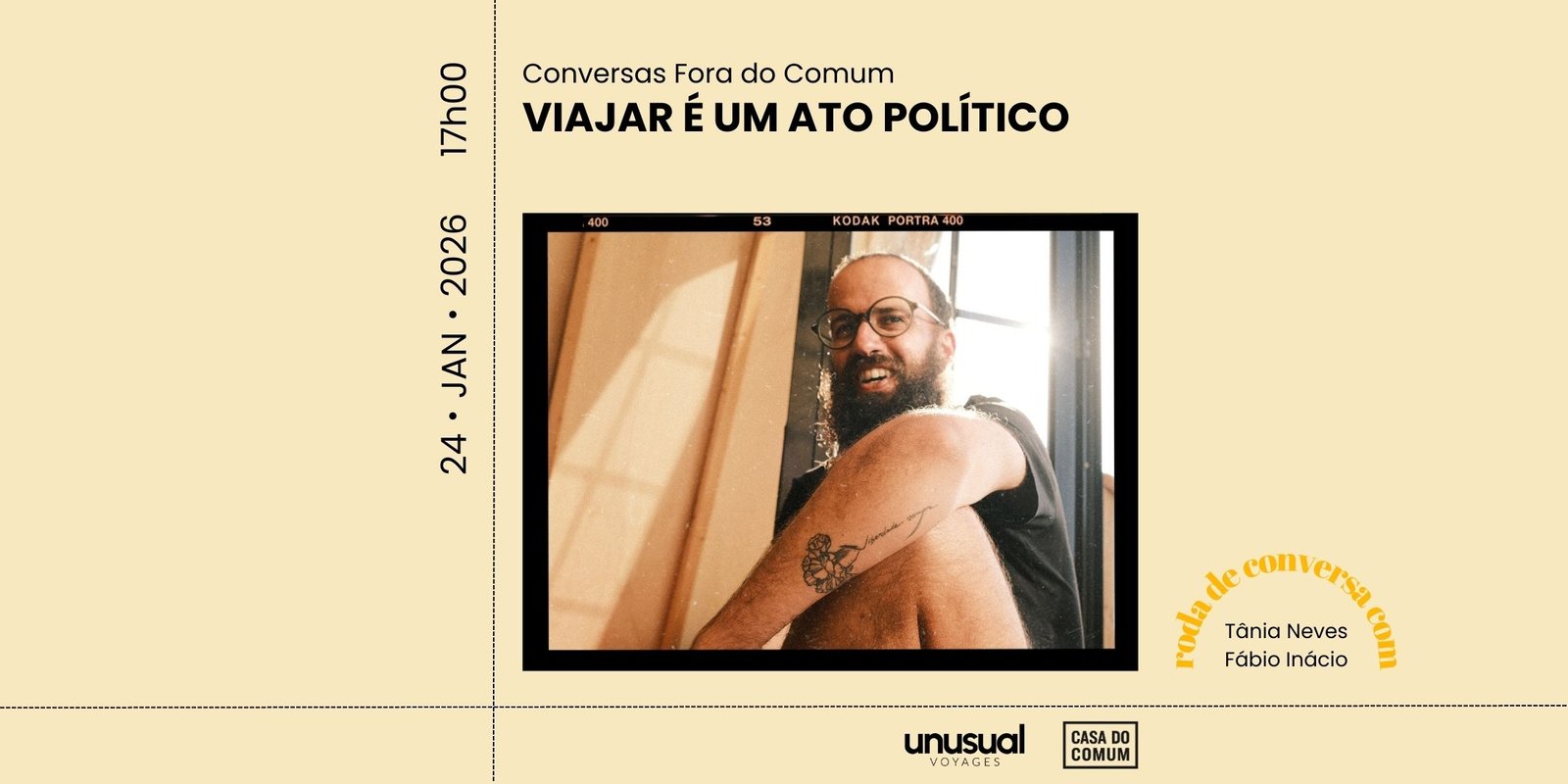
We open the Unusual Conversations cycle on 24 January 2026 with a talk titled “Travel is a Political Act”.
Travel is never neutral. It starts with the passport we hold, the borders we can cross easily — or not — and the assumptions attached to where we come from. It continues in the way we look at places, how we interpret people, and how global politics, conflict and inequality shape our journeys.
For this first conversation, I will be joined by Fábio Inácio — photographer, writer and long-distance traveller. Through stories from years on the road, walking and cycling across countries and continents, we’ll reflect on how travel intersects with power, identity, stereotypes and responsibility.
REGISTER HERE: